

Article
Solar Battery Payback: Costly Mistakes That Wreck Your Calculations
Summary: Solar battery payback claims from most online calculators are 1 to 5 years too optimistic. They ignore battery degradation, the time value of money, tariff volatility, and hidden maintenance costs. Before buying, get a site-specific assessment from a CEC-accredited installer who can model your real consumption patterns, your tariff structure, and your goals for energy independence.
Solar battery payback is the first thing most Canberra homeowners Google before investing in home energy storage. Unfortunately, the solar battery payback numbers they find are almost always wrong.
Most online calculators promise a 5 to 8 year payback period that sounds fantastic on paper. In practice, the real figure lands closer to 8 to 12 years once you account for the variables these tools quietly leave out.
That gap between promise and reality isn't a minor rounding error. It can mean the difference between a battery that pays for itself during its warranty period and one that never does. As a family-owned business with over 6,000 solar installations across Canberra, we've seen firsthand how misleading payback figures lead to buyer regret.
So here are the most common mistakes that throw off battery payback calculations, along with what honest numbers look like for Canberra households in 2026.
Solar Battery Payback Calculators Get These Things Wrong
The standard approach is simple enough. Take the battery cost, divide by annual savings, and get your payback period. A $10,000 battery saving $1,200 per year gives you an 8.3 year solar battery payback. Easy.
However, that simplicity hides some serious flaws. Here's what most calculators assume that doesn't hold up in the real world.
They freeze electricity prices
Australian retail electricity has swung wildly since 2023. The Default Market Offer rose 14 to 24 per cent in 2023/24, dropped 1 to 6 per cent in 2024/25, then climbed again by 0.5 to 9.7 per cent in 2025/26. Meanwhile, feed-in tariffs have collapsed from 44 to 60 cents under early state schemes down to effectively zero in Victoria. Any calculator that locks in today's rate for a 10 to 15 year projection is guessing.
They assume you use 100 per cent of the battery every day
Cloudy weeks, winter production dips, days away from home, and mismatched consumption patterns all mean your battery rarely cycles fully. Real-world utilisation typically falls 15 to 30 per cent below what the brochure assumes.
They quote nameplate capacity, not usable capacity
After accounting for depth of discharge limits and round-trip efficiency losses, a 13.5 kWh battery delivers roughly 11 kWh of energy you can actually use. That's about 81 per cent of what the spec sheet says.
What Happens When Battery Degradation Hits Your Savings
This is the big one that hardly anyone talks about. Every lithium battery loses capacity over time. The rate depends on chemistry, cycling frequency, and temperature.
Lithium iron phosphate (LFP) batteries, which are now the dominant chemistry in products like Tesla Powerwall 3 and Sigenergy, degrade at roughly 1.5 to 2 per cent per year under normal residential use. Older nickel manganese cobalt (NMC) batteries lose capacity faster at 2.5 to 3.5 per cent annually.
What does that mean for solar battery payback? If your system saves $800 in year one, degradation alone drops that to about $624 by year ten. Over a decade, cumulative savings fall roughly 12 per cent below the constant-savings assumption that every simple calculator uses.
Warranty terms tell you what manufacturers themselves expect. Tesla guarantees 70 per cent capacity for 10 years. Sigenergy guarantees 70 per cent but caps total energy throughput. BYD offers the weakest guarantee among major brands at just 60 per cent end-of-warranty capacity. That means a 10 kWh BYD battery only needs to hold 6 kWh to satisfy its warranty.
On top of that, disconnecting a battery from the internet can slash warranty coverage from 10 years down to just 4 years for Tesla or 5 years for Sigenergy. Most buyers never read the fine print. If you're comparing options, our guide on the biggest mistakes homeowners make with batteries covers these warranty traps in detail.
Why Your Tariff Structure Matters More Than the Tariff Rate
Not all electricity plans treat battery savings equally. This is where solar battery payback calculations go sideways for many Canberra homeowners.
On a flat-rate tariff, each kilowatt-hour your battery stores and discharges saves you the difference between the retail rate and the feed-in tariff you gave up by not exporting. In the ACT, that spread is roughly 22 to 30 cents per kWh after efficiency losses.
On a time-of-use (TOU) tariff, the maths change considerably. If your peak rate is 45 cents and your off-peak rate is 18 cents, a battery that shifts consumption from peak to off-peak can save up to 27 cents per kWh. This nearly doubles the value compared to a flat-rate plan.
Meanwhile, proposed electricity network tariff reforms in Australia could shift more of the cost of power from per-kilowatt-hour usage charges to higher fixed daily supply charges.
Modelling by the Institute for Energy Economics and Financial Analysis (IEEFA) suggests that under tariff structures with a higher fixed component, a typical 10 kWh home battery could face between $5,800 and $11,500 in additional lifetime costs.
For Australian households, this could extend the solar battery payback period by roughly 1 to 4 years, depending on the local network, tariff structure, and how much solar energy is stored and used at home.
The takeaway? Your tariff structure can make or break battery economics. Yet most online calculators default to a single flat-rate assumption.
The Hidden Costs That Solar Battery Payback Tools Ignore
Beyond the headline price tag, batteries come with ongoing costs that rarely show up in payback models. Our complete guide to home battery costs in Canberra breaks down the full picture, but here are the big ones:
Opportunity cost of capital. If you invest $8,500 in a battery, that's $8,500 you cannot put into superannuation or other investments. At 7 per cent annual growth, super would turn that $8,500 into roughly $16,700 over 10 years. Your battery savings need to beat that alternative return.
Inverter replacement. Inverters account for 43 per cent of all solar system failures according to industry data. A replacement costs $1,000 to $3,000, and most inverter warranties run just 5 to 10 years. This cost needs to be factored into your payback timeline.
Insurance premiums. Adding a battery increases your insured property value by $10,000 to $15,000, which can nudge premiums upward.
Maintenance. Annual preventive maintenance runs $300 to $850, depending on the system. In the ACT, Evoenergy requires mandatory inverter testing every 5 years, which adds another cost.
How Canberra Homeowners Can Get Honest Solar Battery Payback Numbers
So how do you cut through the noise? Here's what we recommend to every homeowner who walks through our door at our Mitchell workshop.
Start with your real consumption data. Pull 12 months of half-hourly usage data from your retailer. This shows your seasonal patterns, peak demand times, and how much solar you currently export. Without this data, any solar battery payback estimate is a guess.
Match the battery size to your export surplus. If you export 8 kWh of solar per day on average, a 10 kWh battery makes sense. A 15 kWh battery will just sit partially empty most days, and you'll have paid for capacity you don't use.
Model your specific tariff. Whether you're on a flat rate, TOU, or demand tariff with Evoenergy or your retailer, the savings profile changes dramatically. We model this during our free on-site assessments, so you see real numbers, not averages.
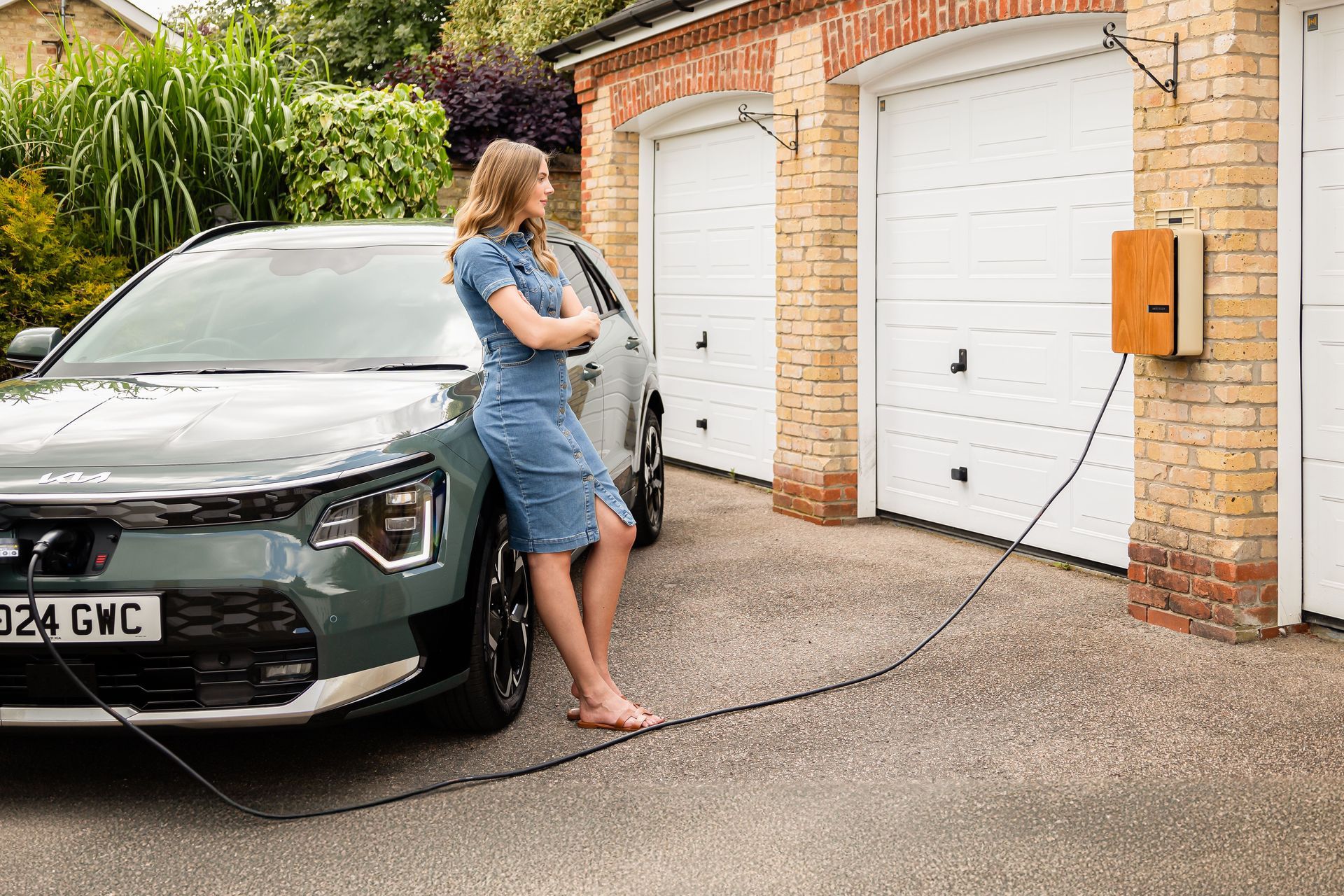
Think beyond payback. A growing number of Canberra homeowners are pairing batteries with EV chargers, heat pump hot water systems, and induction cooktops. This full electrification approach lifts self-consumption from 30 to 40 per cent to 80 to 95 per cent, which fundamentally changes battery payback for the better.
Ask about VPP programmes. Virtual Power Plant participation can earn $200 to $800 per year in Canberra, shaving 1 to 3 years off your payback. It's not guaranteed income, but it's worth factoring in.

When Batteries Make Financial Sense Even Without Perfect Payback
If solar battery payback were the only thing that mattered, most batteries would be a tough sell. But payback calculators can't put a dollar figure on everything.
Blackout protection is essentially insurance
The ACT averages roughly 200 minutes of outages per year. A fully charged 13.5 kWh battery can keep essential loads running for 12 to 24 hours. With solar recharging the next day, backup can be indefinite. For households with medical equipment, home offices, or food-sensitive businesses, this protection has real value. Understanding what a proper solar battery installation includes helps you make sure backup functionality is configured correctly.
Property value
A 2025 Cotality/Commonwealth Bank study found that homes with solar commanded a 2.7 per cent premium, averaging $23,100. Adding a battery can push that higher. In a city like Canberra, where sustainability matters to buyers, this is a genuine asset.
Grid independence
With feed-in tariffs collapsing and network charges rising, the households that can consume the most of their own solar production will be the most financially resilient over the next decade. A battery is the foundation of that resilience.
The honest framing isn't whether a battery will pay for itself. It's whether the combination of financial returns, blackout protection, property value, and energy independence justifies the investment for your household.
Get Honest Numbers for Your Home
Skip the generic online calculators that ignore half the story. Our team will sit down with you and model your actual consumption patterns, your specific tariff structure, and your goals for energy independence. We'll show you real solar battery payback figures based on your home, not industry averages.
Book a
free on-site assessment today and get numbers you can trust before you make a decision.
Frequently Asked questions
What is a realistic solar battery payback period in Canberra?
For most Canberra households with a well-sized system and a TOU tariff, expect 7 to 10 years after accounting for degradation and the time value of money. With the federal Cheaper Home Batteries rebate (30 per cent off upfront costs), this can drop to 6 to 8 years on favourable tariffs.
Does the ACT Sustainable Household Scheme improve payback?
It helps with cash flow since you can borrow up to $15,000. However, the scheme moved from interest-free to 3 per cent interest loans in July 2025, adding roughly $2,400 in costs over 10 years. So it improves accessibility but doesn't dramatically change the payback maths.
Should I get a battery now or wait for prices to drop?
Battery prices are falling roughly 10 to 15 per cent per year. But the federal STC rebate also declines every six months. Waiting 12 months might save you $500 to $1,000 on hardware but cost you a similar amount in reduced rebates. If your current system exports heavily and you're on a TOU tariff, the numbers likely favour moving now.
Can an EV replace a home battery?
Vehicle-to-home (V2H) technology is legal in Australia since November 2024, and your EV's 50 to 100 kWh battery dwarfs a typical 10 to 15 kWh home battery. However, V2H requires a bidirectional charger ($7,000 to $14,000 installed) and your car needs to be home and plugged in. For most households, a home battery and EV charger work best as complementary investments.
What brands does Econ Energy install?
We're Tesla Powerwall Certified Installers and Sigenergy approved. Both offer strong warranties and proven performance in Canberra's climate. We recommend the right product for your home based on your consumption patterns, roof setup, and budget.
share this
Related Articles
Related Articles
GET IN TOUCH
Want to learn More?
Contact our friendly team at Econ Energy and we will get back to you as soon as possible!