

Article
Are Home Batteries Actually Worth It in Canberra?
Summary: For many Canberra homes, a battery can make sense, but it depends on your usage, your solar system, and how long you plan to stay in the home. The real value comes from using more of your own power at night and having greater control over rising electricity prices. The only way to know for sure is to look at your actual numbers, not a sales brochure.
If you've already got solar, this question usually pops up sooner or later.
'Are home batteries worth it in Canberra?'
It's a good question. And to be honest, it deserves a straight answer.
Batteries aren't cheap. They're a long-term investment. For some households, they stack up nicely. For others, it can take time.
Let's walk through it together.
Why This Question Comes Up So Often in Canberra
Canberra has a high uptake of rooftop solar. A lot of homes are exporting power during the day.
Years ago, that export rate was pretty attractive. These days, feed-in tariffs are much lower than what you pay to buy electricity back at night. You can see current ActewAGL electricity pricing to understand the gap between export and import rates.
So the gap between what you're paid to export and what you're charged to import has widened.
That's where battery storage in Canberra starts to make sense.
Instead of selling your excess solar cheaply during the day, you store it and use it in the evening when power costs more.
That's the simple version.
What Does a Home Battery Cost in Canberra?
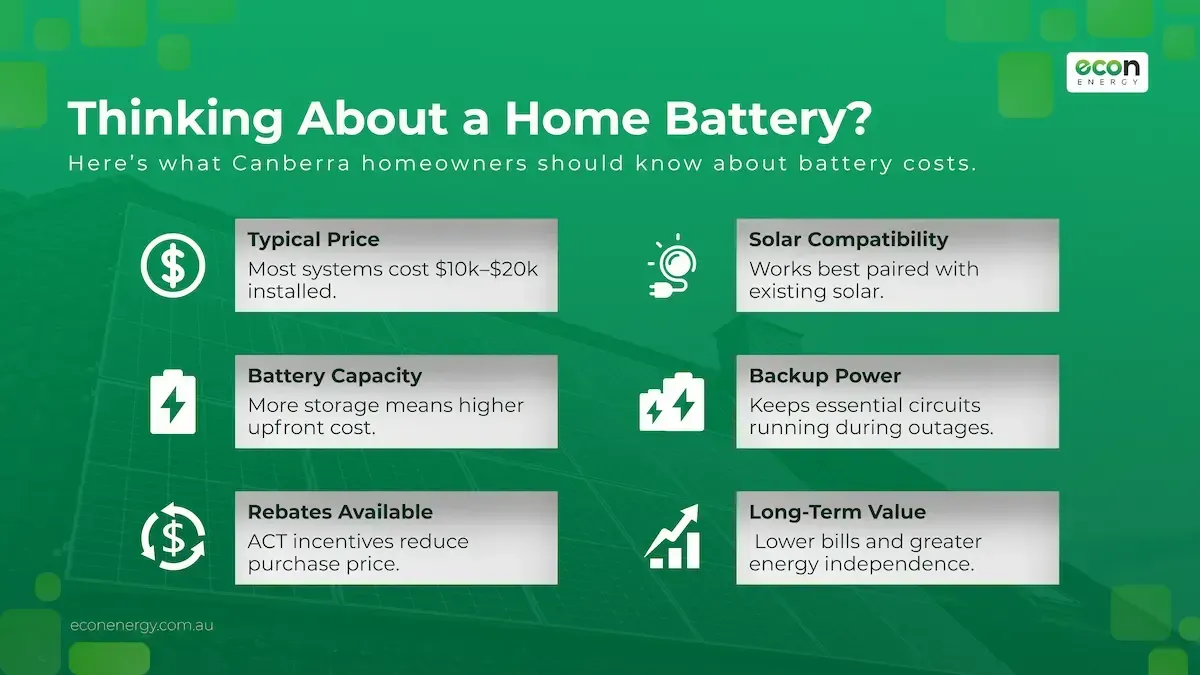
Home battery cost in Canberra usually sits somewhere between $10,000 and $16,000 installed, depending on the size and brand.
Some systems sit higher. Some smaller ones sit lower. It depends on your setup.
It's not a small purchase. And anyone who tells you it will 'pay itself off in no time' without seeing your usage data is guessing.
We prefer to look at real bills. Real usage. Real numbers.
What Drives Home Battery Savings in Canberra?
There are three main things that determine home battery savings in Canberra:
- How much excess solar you export during the day
- How much electricity you use at night
- What tariff you're on
If you're out all day and most of your usage happens in the evening, a solar battery in Canberra can help you use your own stored power instead of buying from the grid at peak rates.
If you're home during the day using appliances while the sun's shining, you're already self-consuming a lot of your solar. In that case, the additional benefit of a battery might be smaller.
This is why the answer is never one-size-fits-all.
We see homes where battery storage makes a lot of sense. We also see homes where we say, 'You're actually doing pretty well without one.'
And we're comfortable saying that.
What About the ACT Battery Rebate?
In the ACT, the Sustainable Household Scheme has helped many households move forward with Canberra home battery installation through interest-free loans.
It's not a cash rebate in your hand, but the solar battery rebate in the ACT can make the upfront cost easier to manage.
Programs change over time. We always recommend checking the official ACT Government page for the latest information on the ACT battery rebate. We're also happy to walk you through what applies to your situation and handle the paperwork side of things.
No surprises.
Is It Just About the Money?
For some people, yes. They want a clear financial return. For others, it's about control.
Electricity prices have been steadily increasing. The Australian Energy Regulator regularly reports on price trends that show this ongoing pattern.
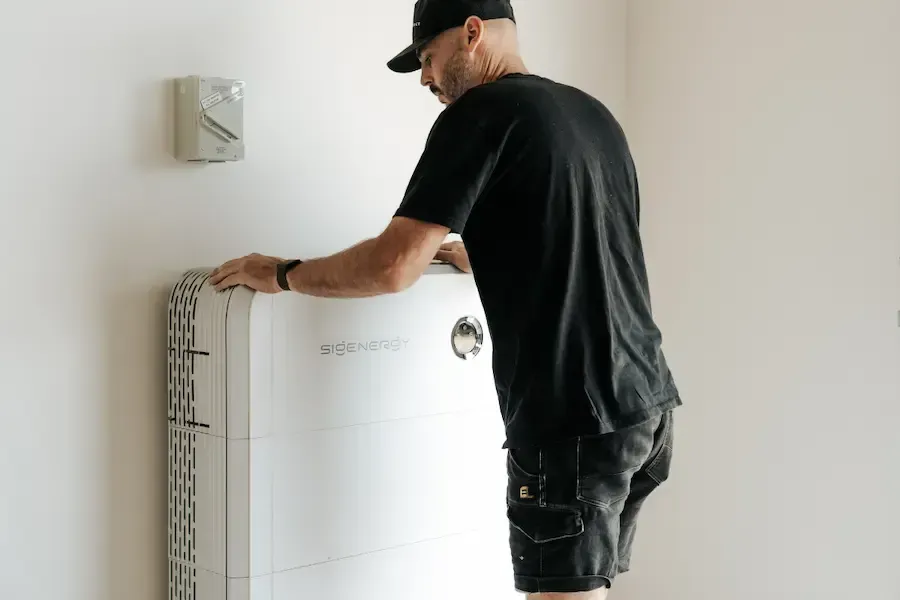
A battery gives you more say over when you use your own energy. It reduces how much you rely on the grid in the evenings. And if configured properly, some systems can provide backup power during outages.
That backup side is important in Canberra. Cold winters. Storm events. Power interruptions do happen.
Not every battery provides full-home backup. It needs to be designed correctly from the start. That's where experience in Canberra home battery installation matters.
Because once it's installed, you want it done properly the first time.
When Does a Solar Battery Make Sense in Canberra?
From what we see across Canberra homes, a battery is more likely to be worth it if:
- You already have a decent-sized solar system
- You export a lot of solar during the day
- You use most of your electricity in the evening
- You plan to stay in your home long-term
- You value backup power and energy independence
It may be less compelling if:
- Your solar system is small
- You use most of your power during the day
- You're planning to move in a couple of years
- You're expecting a very short payback period
We've built our business around honest advice. Sometimes that means recommending less. Sometimes it means saying, 'Not yet.' And that's okay.
What About EVs and Future-Proofing?
More Canberra homeowners are planning for electric vehicles.
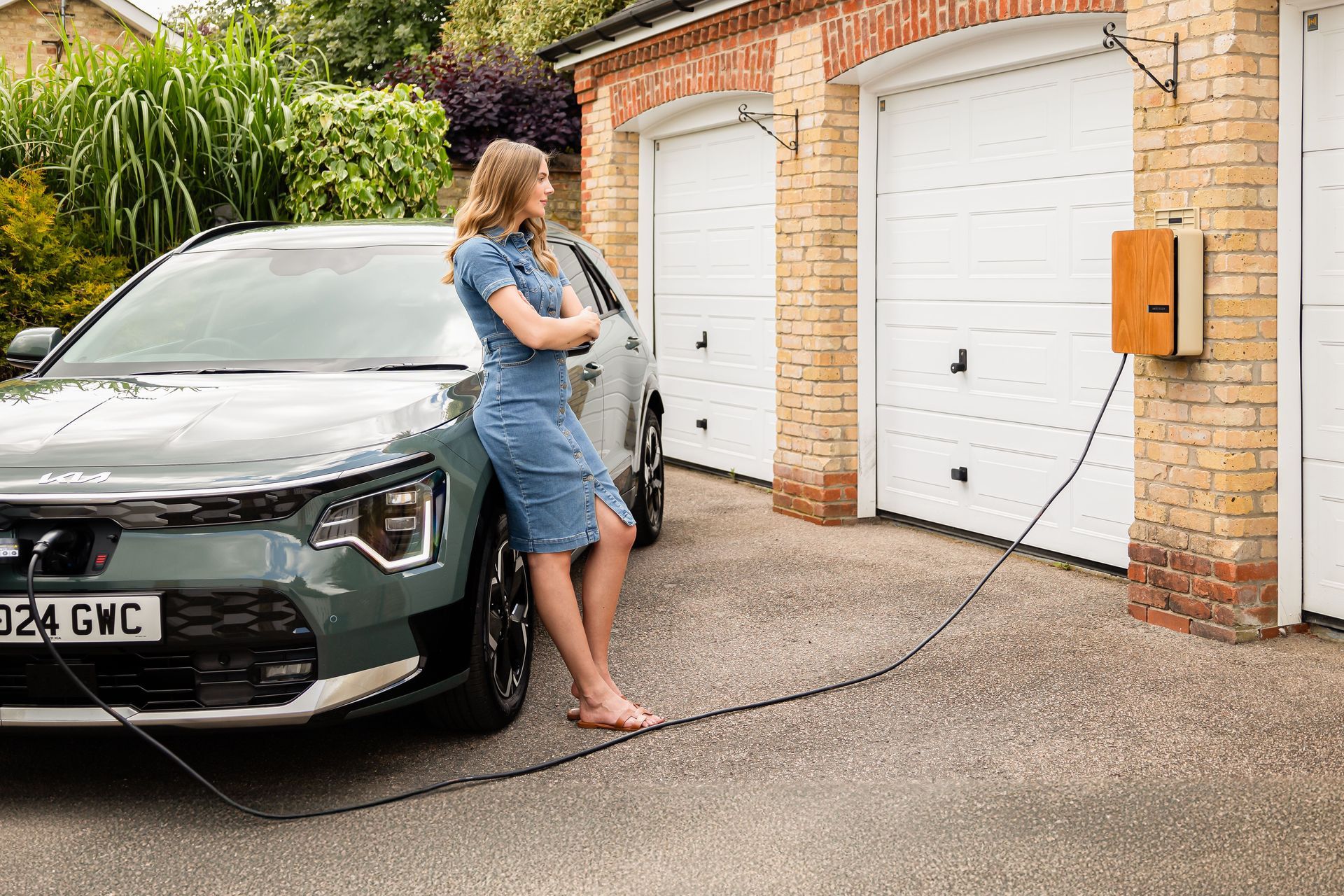
If you're thinking about adding an EV charger in the next few years, battery storage in Canberra can become part of a bigger energy strategy. It helps you manage higher evening demand and use more of your own solar.
It's about future-proofing your home properly, not just reacting to the next power bill.
The Honest Answer: Are Home Batteries Worth It in Canberra?
So, are home batteries worth it in Canberra?
Sometimes yes. Sometimes not yet.
The reality is, it depends on your home, your usage, and your goals.
What we won't do is give you a blanket answer.
We'll look at your bills. We'll look at your solar output. We'll talk through what you actually want, whether that's lower bills, backup power, or long-term independence from rising energy prices.
Then we'll give you clear advice.
No pressure. No subcontractors. Just our in-house Canberra team helping you make a smart decision for your home.
For more information on solar solutions, check out our
guide to choosing the right solar system for your Canberra home.
Frequently Asked questions
How long do home batteries usually last?
Most quality batteries are designed to last around 10 to 15 years, depending on usage and manufacturer warranty.
Can I add a battery to my existing solar system?
In most cases, yes. It depends on your inverter and system setup, but we can assess that quickly during a Canberra home battery installation consultation.
Will a battery power my whole house in a blackout?
Not always. Backup needs to be designed into the system. We'll explain exactly what will and won't stay on.
Do batteries need regular maintenance?
They're generally low maintenance, but it's still wise to have your system checked periodically.
Are battery prices dropping?
Over the long term, home battery costs in Canberra have eased, but short-term supply and demand can affect pricing.
Will installing a battery remove my power bill completely?
Usually not completely, but it can significantly reduce how much you draw from the grid, maximising your home battery savings in Canberra.
Is battery storage safe?
Yes, when installed correctly by qualified electricians using approved products. Installation quality matters.
How do I know what battery size is right for me?
It comes down to your solar production and evening usage. We calculate this based on your real data, not estimates.
share this
Related Articles
Related Articles
GET IN TOUCH
Want to learn More?
Contact our friendly team at Econ Energy and we will get back to you as soon as possible!