
Article
Home EV Charger Installation: The Canberra Wiring Traps That Inflate Your Quote
Summary: Home EV charger installation Canberra quotes vary by thousands because the wiring behind the wall is never identical from one house to the next. Single-phase versus three-phase supply, the age of your switchboard, asbestos backing panels in older homes, and the cable run to your garage all move the price. A 7kW charger usually costs $2,000 to $3,000 installed in the ACT, but supply or board upgrades push it higher. Get a site visit from a licensed local electrician before you compare quotes, because the cheapest number on paper often hides the work that matters.
Home EV charger installation Canberra quotes can differ by thousands of dollars for what looks like the same job on paper. One neighbour pays $1,500. The household 3 doors down pays $4,000. Same charger, same suburb, very different bill.
That gap is not a rip-off. It comes down to what sits behind your wall, inside your meter box, and between your switchboard and your car. So before you grab the lowest quote, it helps to know what genuinely drives the price up.
The ACT leads the country on electric vehicles, with roughly 1 in 5 new cars sold here now electric, according to the
Electric Vehicle Council. As more Canberra households plug in at home, the same handful of wiring traps keep showing up in quotes. Here is what they are.
Why home EV charger installation Canberra quotes vary so much
A home charger quote is really 2 things bundled together. First comes the charger itself. Then comes the electrical work to feed it safely.
The hardware is the easy part to compare. A quality 7kW smart charger like a Tesla Wall Connector, a myenergi Zappi, or a Fronius Wattpilot sits somewhere between $800 and $1,800. The wiring is where quotes split apart, because no 2 homes start from the same place.
In the ACT, a straightforward 7kW install typically lands between $2,000 and $3,000 once fitted, going by the ACT Government's own guidance. Yet the moment your home needs a supply or switchboard upgrade, that figure climbs. Below are the traps that do the climbing.
Single-phase versus three-phase: the biggest hidden cost
Around 90 per cent of Australian homes run on single-phase power, and most Canberra homes are no exception. Single-phase comfortably supports a 7kW charger, which adds roughly 40 kilometres of range an hour and refills most EVs overnight.
Trouble starts when a quote assumes you want three-phase. Three-phase unlocks faster 11kW or 22kW charging, but your car has to support it first. Many popular EVs, including the BYD range, cap their onboard charging at 7kW no matter what you feed them.
Upgrading from single-phase to three-phase is the single most expensive surprise in this category. Across Australia the work runs $3,000 to $8,000, and in the ACT it can reach around $6,000. So unless you already have three-phase, run a workshop, or plan a second EV, the upgrade rarely earns its keep. A good electrician tells you that before quoting it.
Your switchboard might need work first
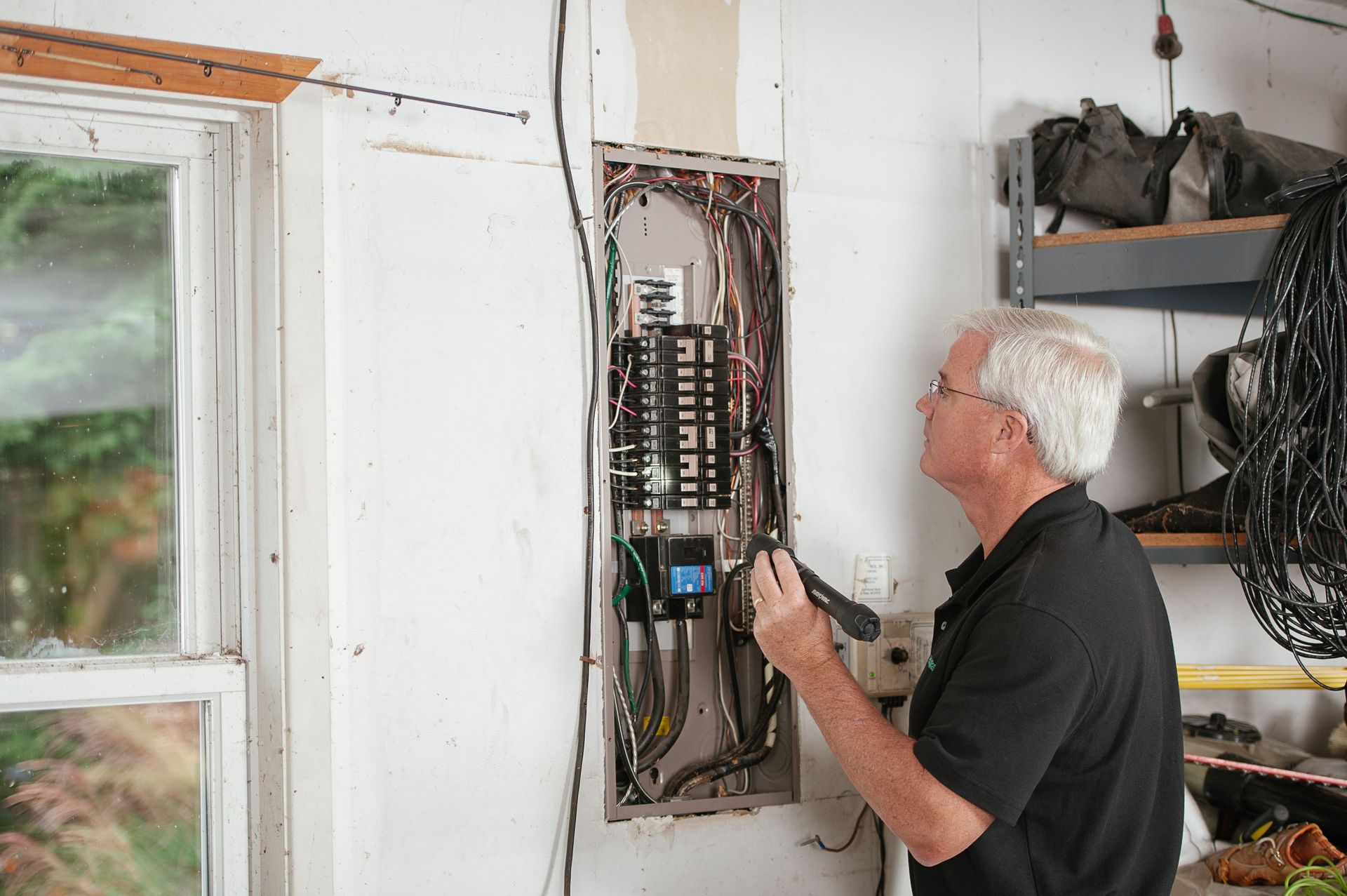
Older switchboards were never built with car chargers in mind. If your board still uses ceramic rewireable fuses, has no room for a safety switch, or is simply full, it needs attention before a charger goes in.
A switchboard upgrade generally costs $800 to $4,500 depending on its age and size. Then there is asbestos. Plenty of Canberra homes built before 1990 carry asbestos backing panels in the meter box, and licensed removal adds another $300 to $2,000.
None of this is padding. A charger draws a steady, heavy load for hours, so the board feeding it has to be safe and compliant. Skip that step and you risk nuisance trips, or worse.
The cable run from your board to your car
Distance is the quiet quote-killer. The further your switchboard sits from your charging spot, the more cable, conduit, and labour the job needs.
Longer runs also force thicker cable. Australian wiring rules limit voltage drop, so a run beyond about 20 metres often jumps from 6mm to 10mm cable, which costs more per metre and needs larger conduit. Then the route itself matters. Surface-mounted conduit along a garage wall is cheap. Running cable through ceilings, down cavity walls, or underground to a detached garage is not.
Trenching to a separate garage or carport can add $300 to $1,500 on its own. Cutting through a concrete driveway adds more again. This is why 2 quotes for the same charger sit thousands apart. One home has the board in the garage. The other needs 25 metres through a tiled wall.
What Evoenergy expects in the ACT
Canberra's network operator, Evoenergy, sets the rules for connecting a charger. For a standard 7kW home charger, your electrician handles those requirements without much fuss.
One myth is worth clearing up. You may read that ACT single-phase chargers are capped at 25 amps. Under Evoenergy's current Service and Installation Rules, a single-phase EV charger is allowed up to 40 amps, so a full 7kW unit runs fine on single-phase. If a quote pushes three-phase using the old 25-amp claim, ask why.
Evoenergy also offers off-peak charging windows that reward you for charging midday or overnight. Because the ACT has run on 100 per cent renewable electricity since 2020, charging at home here is genuinely zero-emission too.
Load management can save you an upgrade
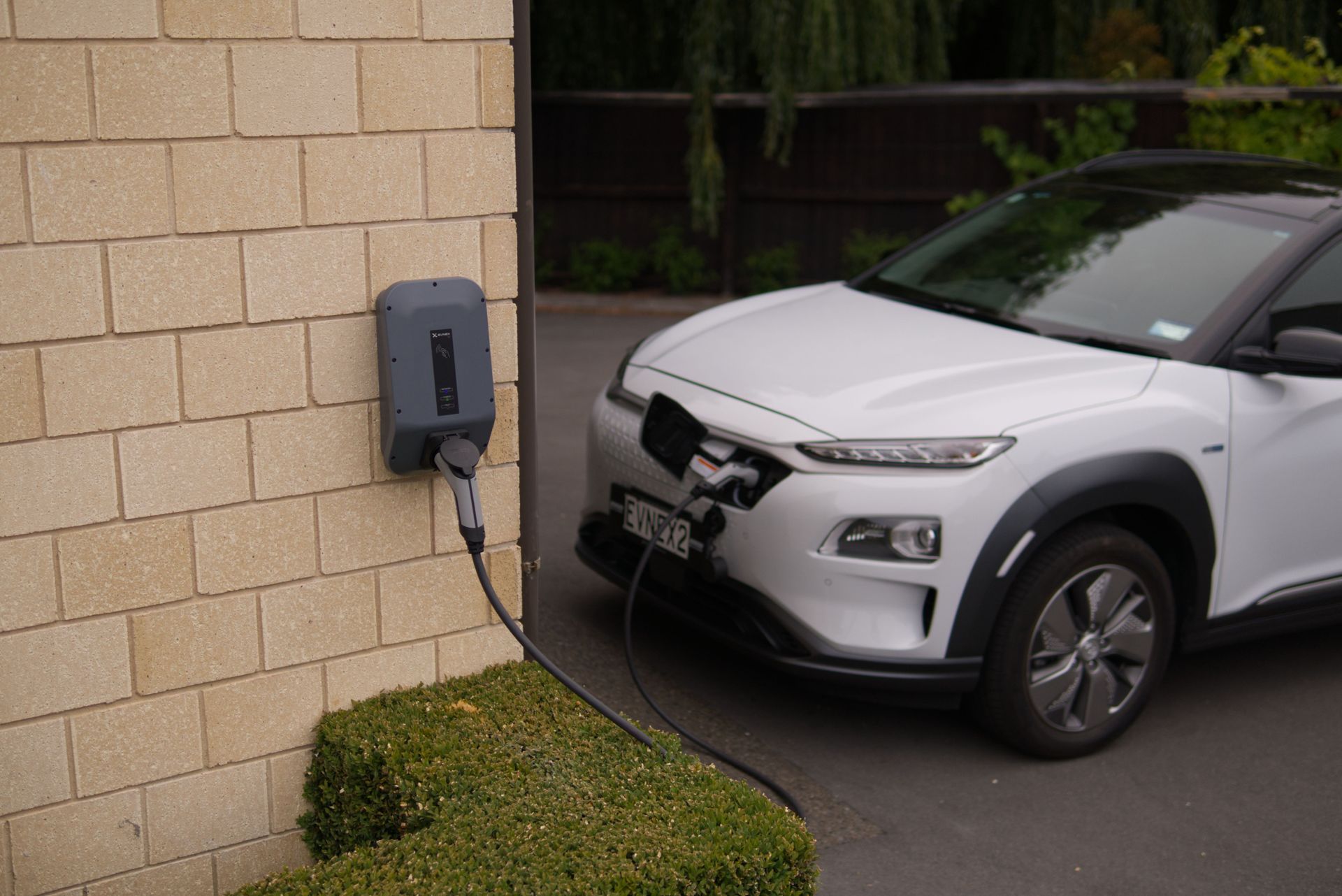
Here is a trap that works in your favour. Dynamic load management uses a small sensor on your main supply to watch how much power your home draws. The charger then throttles itself so the total never overloads your service.
In plain terms, load management can let you keep your existing supply and skip a costly upgrade. The add-on costs roughly $150 to $400, and several smart chargers include the sensor in the box. Pair it with solar and the same setup charges your car from your panels rather than the grid. If you already run
solar and a home battery, this is where everything starts working together.
Safety, RCDs and compliance
EV chargers carry specific safety rules, and they exist for good reason. Every charger needs its own dedicated circuit and the right type of safety switch.
Most modern chargers include built-in DC fault protection, which means a standard Type A safety switch is enough. If a charger lacks that protection, it needs a pricier Type B device, which adds a few hundred dollars. A licensed electrician matches the safety switch to your charger and issues a Certificate of Electrical Safety.
That certificate matters beyond compliance. A cheap or unpermitted install can void your home insurance and disqualify you from rebates. Cutting corners here is never the saving it appears to be.
Rebates: the ACT Sustainable Household Scheme
The ACT's main support for chargers is the Sustainable Household Scheme. It offers loans from $2,000 to $15,000, and EV chargers are eligible.
One change is worth noting. Since 1 July 2025 the loan carries a 3 per cent fixed rate rather than being interest-free for most households. Concession-card holders can still access zero-interest support through a separate program. So the scheme helps with cash flow, even if it no longer makes the charger free to borrow against.
What about vehicle-to-home charging?
Bidirectional charging, where your car powers your house, became legal in Australia in November 2024 once Standards Australia updated the rules. It is an exciting idea, since an EV battery dwarfs a typical home battery.
For now, though, it stays niche. Hardware and installation for a vehicle-to-home setup runs roughly $10,000 to $20,000, and very few popular EVs support it yet. The
Clean Energy Council lists approved units as they arrive. Most Canberra households are better off future-proofing instead: leave spare switchboard capacity, choose a smart charger, and stay solar-ready.
Why an in-house electrician makes the difference
Every trap above comes back to one thing. A home charger install is only as good as the person who scopes it.
When the electrician who quotes your job is the same one who installs it, nothing gets lost between the sales pitch and the work. At Econ Energy, our in-house licensed electricians visit your home first. They check your switchboard, your supply, and your cable route, then give you a clear quote with no surprises on install day. We are a local family business, and we put our name on every job.
So if you want honest numbers for
your EV charger, book a free on-site assessment. We will show you exactly what your home needs, and nothing it does not.
Frequently Asked questions
How much does home EV charger installation cost in Canberra?
A standard 7kW charger usually costs $2,000 to $3,000 installed in the ACT. Supply upgrades, switchboard work, asbestos removal, or a long cable run push that higher. A site visit gives you a far more accurate figure than a phone estimate.
Do I need three-phase power for a home charger?
Most homes do not. Single-phase supports a 7kW charger, which charges most EVs fully overnight. Three-phase only helps if your car accepts 11kW or more and you genuinely need faster charging.
Can I install an EV charger myself?
No. Only a licensed electrician can legally install a charger in the ACT, and a compliant install includes a Certificate of Electrical Safety. A DIY job can void your insurance.
Will an EV charger work with my solar panels?
Yes. A smart charger with solar integration charges your car from excess solar during the day, which cuts your running costs. Load management ties it neatly to your existing system.
share this
Related Articles
Related Articles
GET IN TOUCH
Want to learn More?
Contact our friendly team at Econ Energy and we will get back to you as soon as possible!